
Living a healthier life does not always require a strict diet, an expensive gym membership or a complete change in your daily routine. Sometimes, the smallest habits make the biggest difference over time.
Think about your everyday routine. Do you spend most of your day sitting? Do you skip meals when work gets busy? Do you stay up late scrolling through your phone? These little patterns can gradually become part of everyday life without us paying much attention to them.
The good news is that building a healthier lifestyle can start with simple, realistic changes. You do not have to change everything overnight. Start with one or two habits, give yourself time to adjust and gradually build a routine that works for you.
Here are five practical habits that can help you create a healthier and more balanced everyday lifestyle.
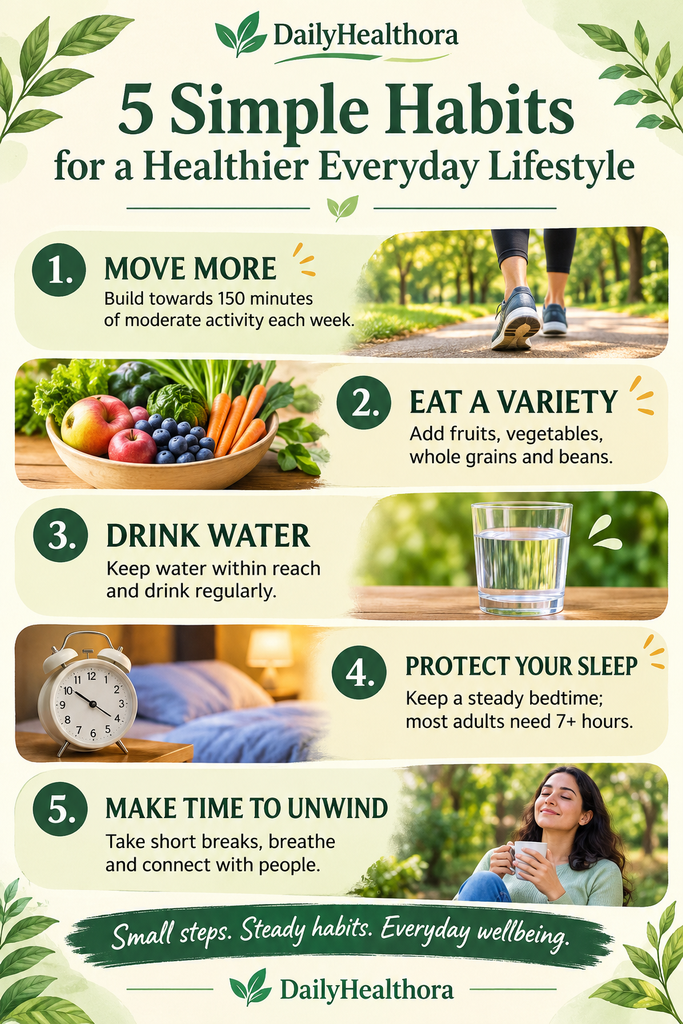
1. Start Moving More Throughout the Day
You do not need to spend hours exercising to become more active. Walking, stretching, cycling, gardening or even taking short movement breaks during work can help you reduce long periods of sitting.
For example, you could:
- Take a 15–20 minute walk in the morning.
- Walk around for a few minutes after long periods of sitting.
- Choose stairs instead of elevators when practical.
- Try simple stretching exercises during work breaks.
- Enjoy outdoor activities with family or friends.
The World Health Organization recommends that adults aim for at least 150–300 minutes of moderate-intensity physical activity each week. Muscle-strengthening activities are also recommended on two or more days per week.
If you are currently inactive, do not feel pressured to reach that target immediately. Start with a comfortable amount and gradually increase your activity.
2. Make Your Meals More Balanced and Colourful
Healthy eating is not about giving up every food you enjoy. It is about creating a better balance and including a variety of nutritious foods in your meals.
A colourful plate can be a simple reminder to include different food groups.
Try adding:
- Seasonal fruits such as apples, oranges, berries or bananas.
- Green vegetables such as spinach, broccoli and beans.
- Whole grains such as oats, brown rice and whole-wheat foods.
- Protein sources such as lentils, beans, eggs, fish or other suitable alternatives.
- Nuts and seeds in moderate portions.
One useful habit is to prepare some meals at home instead of depending on packaged snacks or takeaway food every day.
You can also keep washed fruits or a small bowl of nuts within easy reach when you need a snack.
According to the World Health Organization, adults and children over 10 should aim for at least 400 grams of fruits and vegetables each day.
Remember, a balanced diet can look different for different people. Your food choices should consider your health needs, culture, preferences and lifestyle.
3. Drink Water Regularly
Sometimes, we become so busy with work that we forget to drink water throughout the day.
Keeping a reusable water bottle near your desk or carrying one when you go outside can make this habit easier.
A few practical ideas:
- Start your morning with a glass of water if that suits you.
- Keep water accessible during working hours.
- Drink with meals and when you feel thirsty.
- Choose water more often instead of sugary drinks.
- Carry a bottle when travelling or exercising.
Your fluid needs depend on several factors, including climate, activity level, diet and individual health conditions. There is no single daily water target that is right for everyone.
Water is generally a simple and practical everyday drink choice.
4. Give Your Sleep Routine More Attention
A busy lifestyle can easily push bedtime later and later. Between work, household responsibilities and mobile phones, getting enough sleep sometimes becomes an afterthought.
However, sleep deserves the same attention as healthy eating and physical activity.
Most adults aged 18–60 need at least seven hours of sleep each night.
Here are a few ways to build a better bedtime routine:
- Try to sleep and wake up at consistent times.
- Reduce screen time before going to bed.
- Keep your bedroom comfortable, quiet and relaxing.
- Avoid heavy meals close to bedtime if they disturb your sleep.
- Reduce caffeine intake in the afternoon or evening if it affects your sleep.
You do not need a complicated nighttime routine. Even small changes, followed consistently, can help you create a more comfortable sleep schedule.
5. Make Time to Relax and Enjoy Everyday Life
A healthy lifestyle is not only about food and exercise. It also includes making space for rest, enjoyable activities and meaningful connections.
Many people move from one responsibility to another without taking a proper break.
Try making a little time for yourself each day.
You could:
- Spend 10 minutes reading a book.
- Enjoy a quiet morning walk.
- Practice gentle breathing exercises.
- Spend time with family or friends.
- Take care of indoor plants or a small garden.
- Enjoy a hobby that helps you unwind.
You do not need to follow a particular wellness trend or buy expensive products to make your daily routine more enjoyable.
Find activities that genuinely help you feel refreshed.
A Simple Daily Wellness Routine to Get Started
If you are wondering how to bring these habits together, start with this flexible daily routine.
Morning
- Wake up at a consistent time.
- Drink water.
- Enjoy a balanced breakfast.
- Take a short walk or do some gentle stretching.
Afternoon
- Choose a balanced lunch.
- Take short movement breaks.
- Keep water accessible.
- Step away from your screen when possible.
Evening
- Enjoy a relaxed walk or another activity you like.
- Spend quality time with family or friends.
- Reduce unnecessary screen time before bed.
- Follow a regular sleep schedule.
This is only an example. Adjust the routine according to your work schedule, family responsibilities and personal needs.
Don’t Try to Change Everything in One Day
One common mistake people make when starting a healthier lifestyle is trying to change everything at once.
They suddenly follow a strict diet, begin intense workouts and create a complicated daily schedule. After a few days, the routine becomes difficult to maintain.
Instead, keep things simple.
For the first week, focus on drinking water regularly and walking a little more. During the next week, pay more attention to your meals. Then gradually improve your sleep schedule and make time for relaxation.
Small changes are easier to fit into everyday life when you give yourself enough time.
The goal is not to follow a perfect routine every day. It is to develop habits that you can realistically maintain.
Frequently Asked Questions
1. What are the most important habits for a healthy lifestyle?
Regular physical activity, balanced eating, adequate sleep, drinking enough fluids and making time for relaxation are useful foundations for a healthy lifestyle.
2. Can I improve my lifestyle without going to the gym?
Yes. Walking, cycling, dancing, gardening and home-based exercises are all ways to become more active. Choose activities that suit your ability and circumstances.
3. How can I start a healthy daily routine?
Start with one or two manageable habits. For example, take a short daily walk and establish a consistent bedtime. Add more habits gradually.
4. Is it necessary to follow a strict diet to stay healthy?
Not necessarily. A balanced eating pattern that includes a variety of nutritious foods is generally more practical and sustainable than unnecessarily restrictive diets.
5. How long does it take to develop healthy habits?
There is no fixed timeline. It varies depending on the person, the habit and their circumstances. Consistency and realistic expectations are more useful than rushing the process.
Final Thoughts
A healthier lifestyle is built through everyday decisions, not overnight transformations.
Whether you start by taking a morning walk, preparing a balanced meal or putting your phone away before bedtime, every positive step is an opportunity to take better care of yourself.
Choose habits that fit your life, make gradual improvements and remember that progress matters more than perfection.
At DailyHealthora, we believe that natural wellness begins with informed choices and simple everyday habits.
Health Disclaimer:
This article is intended for general educational and informational purposes only. It is not a substitute for professional medical advice, diagnosis or treatment. Individual health and nutritional needs may vary. Consult a qualified healthcare professional before making significant changes to your diet, exercise routine or health practices, particularly if you have an existing medical condition.
Leave a Reply